
The conversation around artificial intelligence has shifted. A year ago, the primary focus for most operations managers was the implementation of a functional chatbot to handle customer inquiries. Today, the dialogue has evolved toward a more sophisticated architecture: the AI agent. While the terms are often used interchangeably in casual settings, the technical and strategic differences between a chatbot and an AI agent are profound. Understanding these distinctions is no longer just a technical requirement for IT departments; it is a strategic necessity for digital strategists and business leaders looking to maintain a competitive edge in an increasingly automated economy.
Defining the Divide: Reactive vs. Proactive Systems
At its core, the difference between a chatbot and an AI agent comes down to the nature of the interaction. A chatbot is fundamentally reactive. It exists as a conversational interface, waiting for a user to provide a prompt before it acts. Most chatbots are designed to handle single-turn interactions, such as answering a frequently asked question or gathering basic contact information. Even with the integration of large language models, their primary goal remains the same: to provide a relevant response based on a specific input.
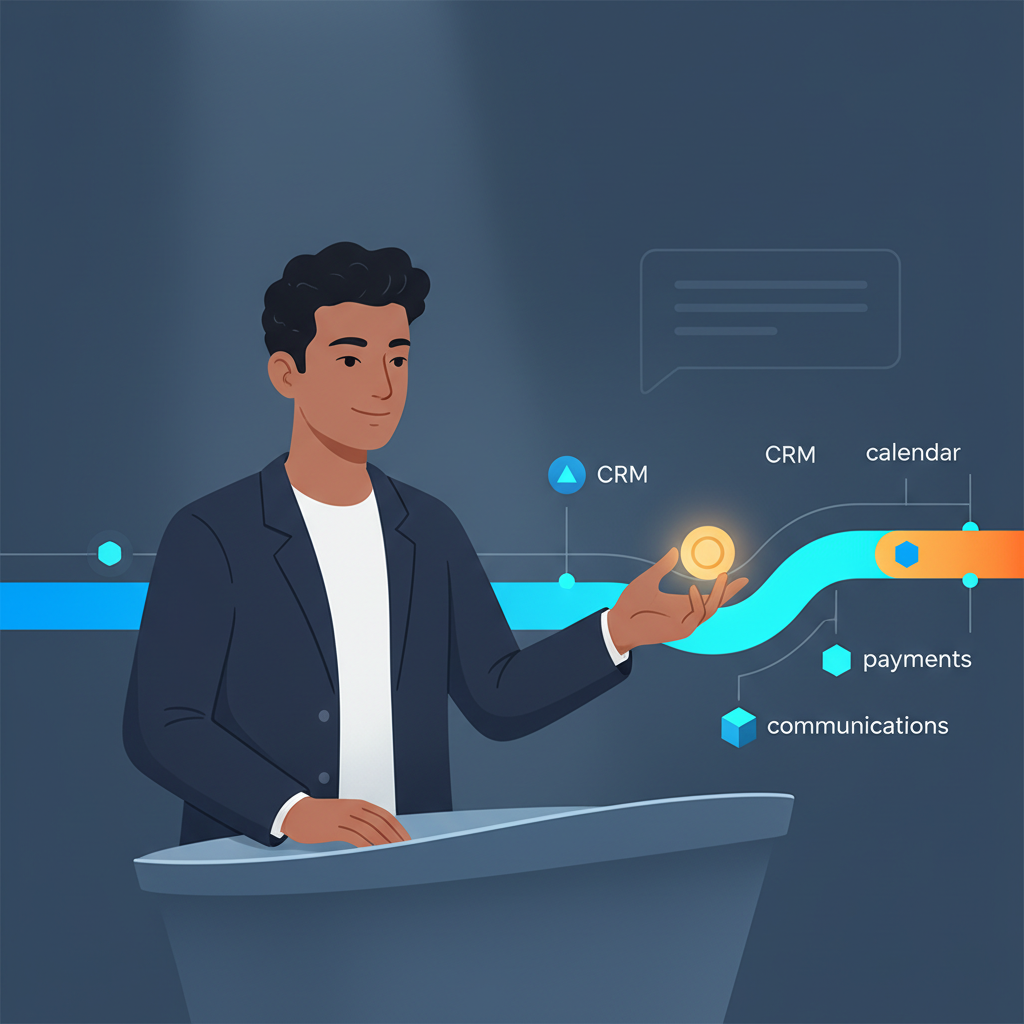
AI agents, however, are proactive. They do not just respond; they execute. An agent is designed to pursue a goal independently by planning, reasoning, and navigating multi-step workflows. If a chatbot is a digital receptionist that can tell you where the conference room is, an AI agent is the project manager who can book the room, invite the attendees, order the catering, and follow up with the minutes after the meeting is over.
This shift from conversation to execution is what defines the next generation of business operations. According to research from the Adobe Business Blog (2026), a chatbot might explain a company’s refund policy to a customer, but an AI agent can autonomously evaluate that customer’s specific request, check the CRM for purchase history, interface with payment gateways to trigger the refund, and send a confirmation email without any human intervention.
Technical Architecture: Stateless vs. Stateful
The architectural differences between these two systems explain why agents are significantly more powerful than their chatbot predecessors. Most chatbots operate on a stateless or session-based model. This means that once the chat window is closed, the context is often lost. The system retrieves information from a narrow knowledge base or a single database to generate a response, but it rarely has the authority or the technical plumbing to modify that data.
AI agents are built as stateful systems with persistent memory. They are architected to maintain context over days, weeks, or even months. This allows them to learn from past interactions and adapt their strategies in real time to fulfill long-term objectives.
The integration requirements for agents are also much more complex. While a chatbot might only need to interface with a website’s FAQ page, an AI agent requires deep integration with multiple APIs and enterprise tools. This includes CRMs like Salesforce, communication platforms like Slack, and various workflow automation systems. To manage the operational risks associated with such high levels of autonomy, businesses must implement robust backend orchestration, including role-based governance, policy enforcement, and clear escalation protocols.
Reasoning and Problem Solving
One of the most significant limitations of traditional chatbots is their reliance on scripted decision trees. When a user asks a question that falls outside the pre-programmed parameters, the chatbot typically fails or forces an escalation to a human agent. They lack the ability to reason through unexpected scenarios.
AI agents possess advanced reasoning capabilities that allow them to break down a high-level goal into smaller, manageable subtasks. They can evaluate multiple approaches to a problem and adjust their course of action based on intermediate outcomes. This ability to handle edge cases is what makes them suitable for complex business operations. Instead of getting stuck in a loop, an agent can identify a roadblock, search for a workaround, and continue toward the objective.
The Rise of Answer Engine Optimization (AEO)
As AI systems become the primary way users and businesses interact with information, a new discipline has emerged: Answer Engine Optimization (AEO). Unlike traditional SEO, which focuses on ranking in search engine results pages, AEO is about ensuring your content is the preferred source for AI-powered answer engines like ChatGPT, Google AI Overviews, and Microsoft Copilot.
For business leaders, AEO is a critical component of an AI strategy. When an AI agent or chatbot searches for information to fulfill a task, it prioritizes content that is structured, authoritative, and easily extractable.
Key trends in AEO for 2026 include:
- Structured Formatting: Content must be formatted for easy citation, using clear lists and unambiguous answers that AI models can parse quickly.
- E-E-A-T Signals: AI platforms place a heavy emphasis on Experience, Expertise, Authoritativeness, and Trustworthiness. Establishing these signals is essential for being cited as a primary source.
- Freshness and Accuracy: AI engines prioritize current information. Regularly updating digital assets is no longer optional; it is a requirement for visibility.
- Platform Specificity: Different engines have different preferences. While Google AI Overviews may lean on traditional SEO signals, platforms like Perplexity often emphasize user-generated content and community-driven data.
Integrating AEO with AI agents ensures that when these agents act, they are relying on the most up-to-date and authoritative content available. This not only improves operational performance but also builds customer trust.
AI agents justify higher investment by autonomously executing complex processes, often delivering ROI three to five times higher than traditional chatbots.
Strategic Implications for Business Leadership
Deciding between a chatbot and an AI agent depends entirely on the complexity of the workflow in question. For high-volume, simple queries, a chatbot remains a cost-effective and efficient solution. It reduces the burden on human support teams by filtering out basic questions that do not require deep reasoning.
However, for processes that span multiple systems and require autonomous decision-making, the investment in AI agents is increasingly justified. Early data suggests that the ROI for AI agents can be significantly higher than that of chatbots because they don’t just facilitate a conversation; they complete the work. By automating multi-step, cross-system processes, agents allow human employees to move away from administrative tasks and toward high-value strategic work.
The transition to an agent-based model also requires a shift in how businesses think about their data and content. To be effective, agents need access to clean, structured data and a content ecosystem optimized for AEO. Without this foundation, even the most sophisticated agent will struggle to provide accurate results or navigate complex workflows.
Looking Ahead: The Autonomous Enterprise
The move from chatbots to AI agents represents a fundamental change in the digital landscape. We are moving away from a world where we use software to do work, and toward a world where we give goals to software that does the work for us.
For operations managers and digital strategists, the path forward involves a dual approach. First, identify the workflows where autonomy can provide the most significant leverage. Second, begin the process of optimizing the company’s digital footprint for answer engines to ensure that both internal agents and external AI platforms are using the best possible information.
The businesses that succeed in this new era will be those that view AI not just as a better way to talk to customers, but as a better way to run an organization. The future of operations is not just conversational; it is autonomous.
References:
Adobe Business Blog: Key Differences Between AI Agents, Chatbots, and Assistants
MindStudio Blog: The Difference Between AI Chatbots and AI Agents
Evergreen Media: Answer Engine Optimization (AEO): AI visibility in 2026